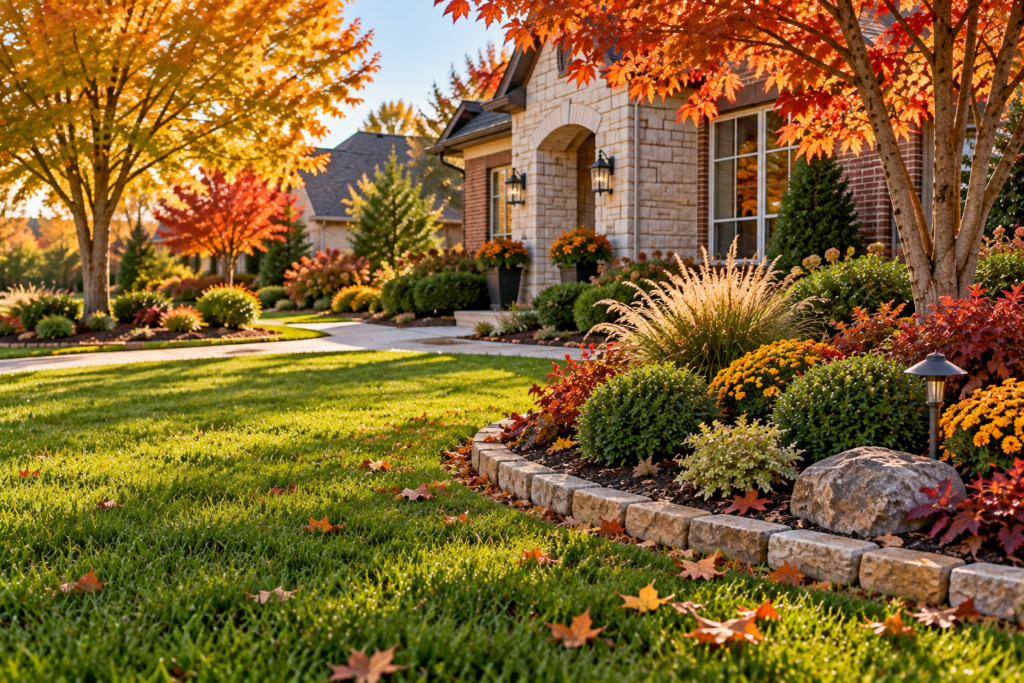
Fall is an important transition period for lawns in North Texas. After months of intense summer heat, your grass is beginning to slow down as temperatures cool and daylight hours become shorter. That doesn’t mean lawn care is finished for the year. In fact, the right fall lawn care can help your yard recover from summer stress and prepare for the colder months ahead.
North Texas lawns commonly include warm-season grasses such as Bermuda, St. Augustine, and Zoysia. These grasses respond differently to changing temperatures, but they all benefit from adjusting your lawn care routine as fall arrives.
Whether you live in Frisco, Prosper, Little Elm, The Colony, Plano, McKinney, Lewisville, or another North Texas community, these fall lawn care tips can help keep your yard healthy and well-maintained.
Adjust Your Watering Schedule
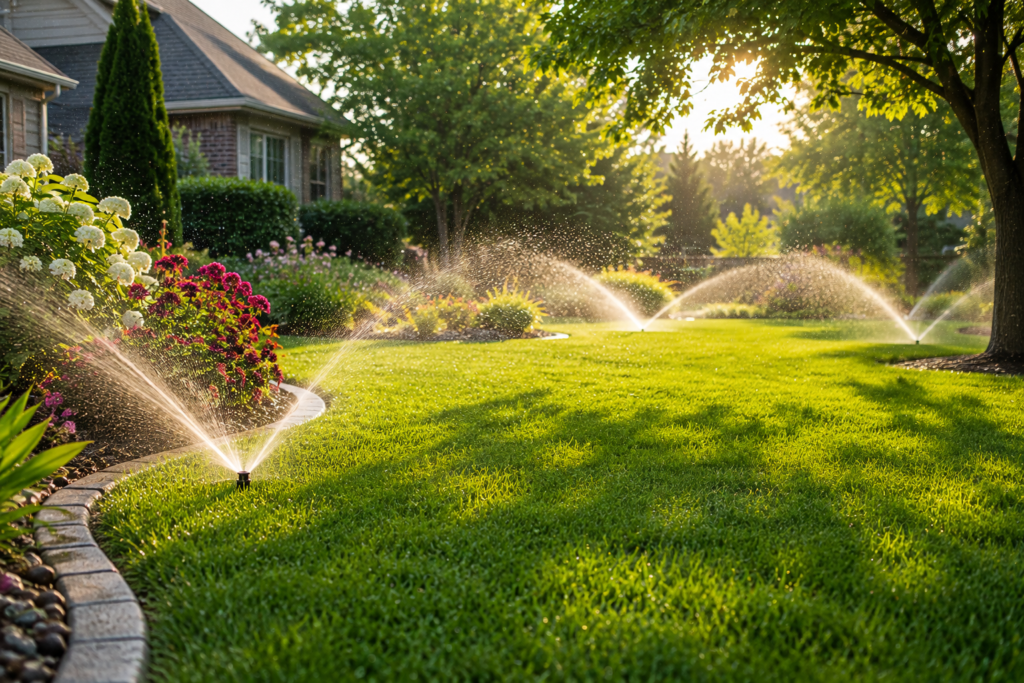
Your lawn’s water requirements change as summer temperatures begin to fall.
During the hottest part of the year, lawns can require frequent irrigation to handle high temperatures and evaporation. As fall arrives, cooler temperatures and occasional rainfall usually reduce the amount of supplemental water your lawn needs.
Instead of continuing your summer irrigation schedule, pay attention to the condition of your lawn and the weather.
Signs that your lawn may need water include:
- Grass that looks wilted or stressed
- Footprints that remain visible after walking across the lawn
- Dry or cracking soil
- Grass blades that are losing their normal color
- Extended periods without meaningful rainfall
At the same time, avoid keeping the soil constantly wet. Overwatering in the fall can create its own problems, particularly when temperatures are cooler and the lawn isn’t using water as quickly as it does during summer.
Adjust your irrigation system as needed rather than relying on the same schedule throughout the year.
Keep Mowing While Your Grass Is Growing
One common fall lawn care mistake is putting the mower away too early.
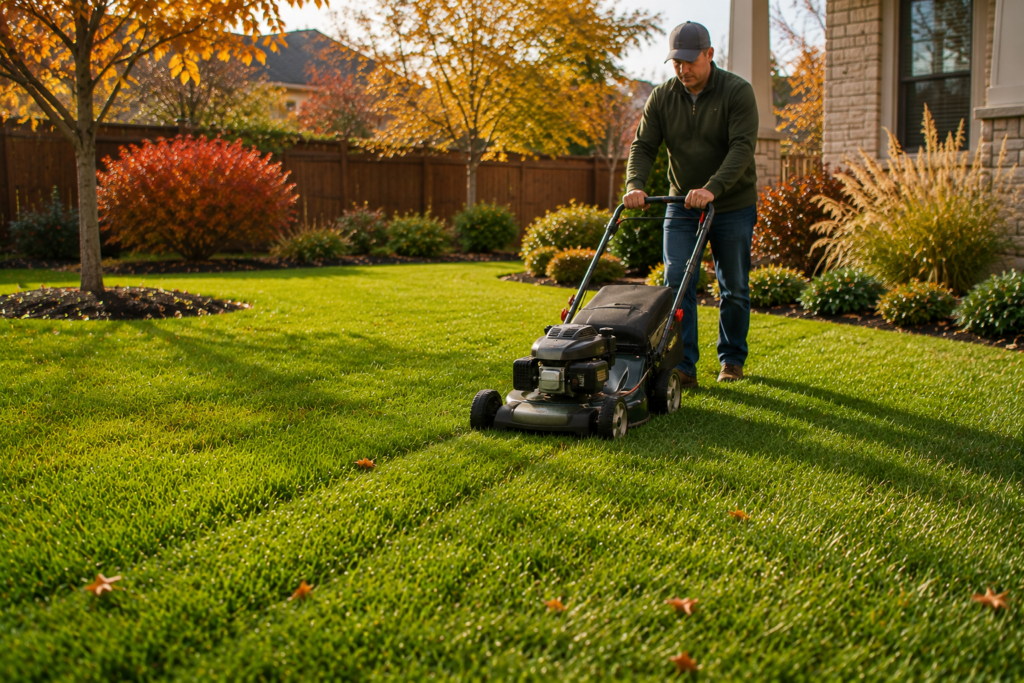
Warm-season grass doesn’t stop growing simply because September or October arrives. As long as your lawn is actively growing, continue mowing when necessary.
You should also avoid removing too much of the grass blade at once. A good rule is to remove no more than one-third of the grass height during a single mowing.
As growth slows, you’ll naturally find yourself mowing less frequently.
Keeping your mower blades sharp is another simple way to improve lawn maintenance. A sharp blade produces a cleaner cut, while a dull blade can tear the grass and leave the lawn looking ragged.
Mowing Tips for North Texas Lawns
Your mowing height should depend on your type of grass. Bermuda, St. Augustine, and Zoysia don’t all have the same mowing requirements.
Rather than cutting your lawn extremely short in an attempt to reduce mowing, maintain an appropriate height for your particular grass variety. A slightly taller lawn heading into cooler weather can also help protect the turf as growth slows.
Be Careful With Fall Fertilizer
Fertilizing your lawn isn’t simply a matter of applying more product whenever the grass starts looking less green.
Your grass needs nutrients while it is actively growing, but applying fertilizer too late in the season can encourage growth when the lawn is naturally beginning to slow down.
If your lawn needs fertilizer in the fall, consider:
- Your type of grass
- Current lawn growth
- Soil conditions
- Previous fertilizer applications
- Recent weather
- The expected timing of colder weather
A soil test can also help determine whether your lawn actually needs additional nutrients.
Avoid guessing based solely on color. A yellow or struggling lawn can have several possible causes, including watering problems, compacted soil, pests, disease, or nutrient deficiencies.

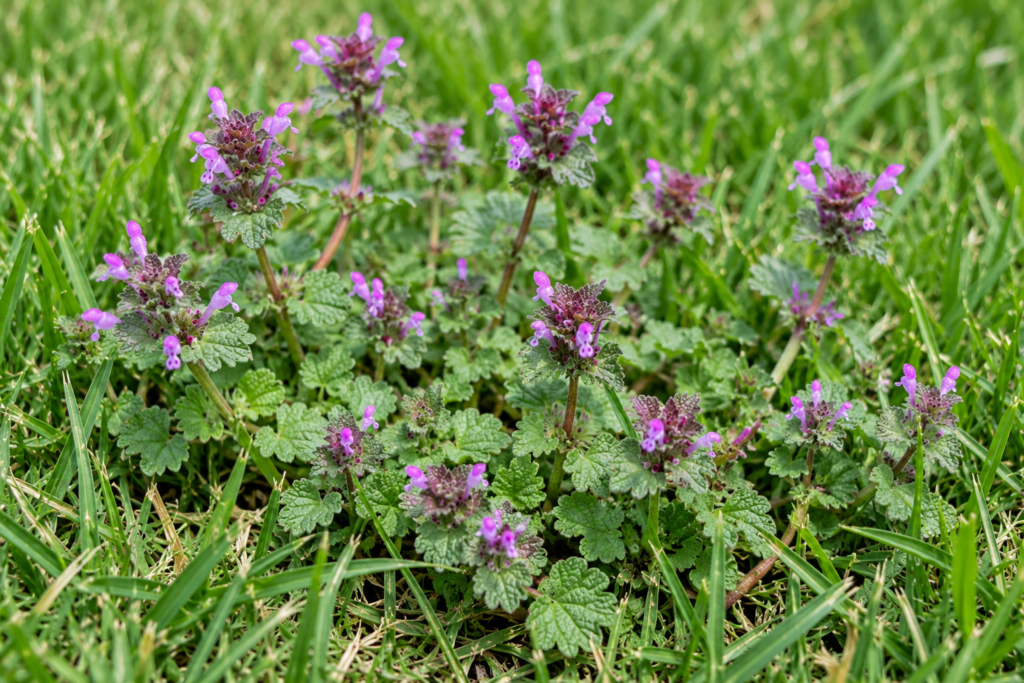
Check Your Lawn for Weeds
Fall is an excellent time to inspect your lawn for weeds.
As warm-season grass begins slowing down, thin or bare areas can become easier places for weeds to establish. Catching problems early can make weed control much easier.
Look for weeds around:
- Bare patches
- Driveways and sidewalks
- Fence lines
- Landscape beds
- Areas with thin grass
- Places where water collects
The best treatment depends on the type of weed and the type of grass growing in your yard. Don’t assume that a weed-control product that’s safe for one turf variety will automatically be safe for another.
If you’re unsure what you’re dealing with, identifying the weed before treating it can save you time, money, and potential damage to your lawn.
Give Your Soil Some Attention
Healthy grass starts with healthy soil.
North Texas properties can have challenging soil conditions, particularly areas with heavy clay or soil that has become compacted from construction, foot traffic, pets, or outdoor activities.
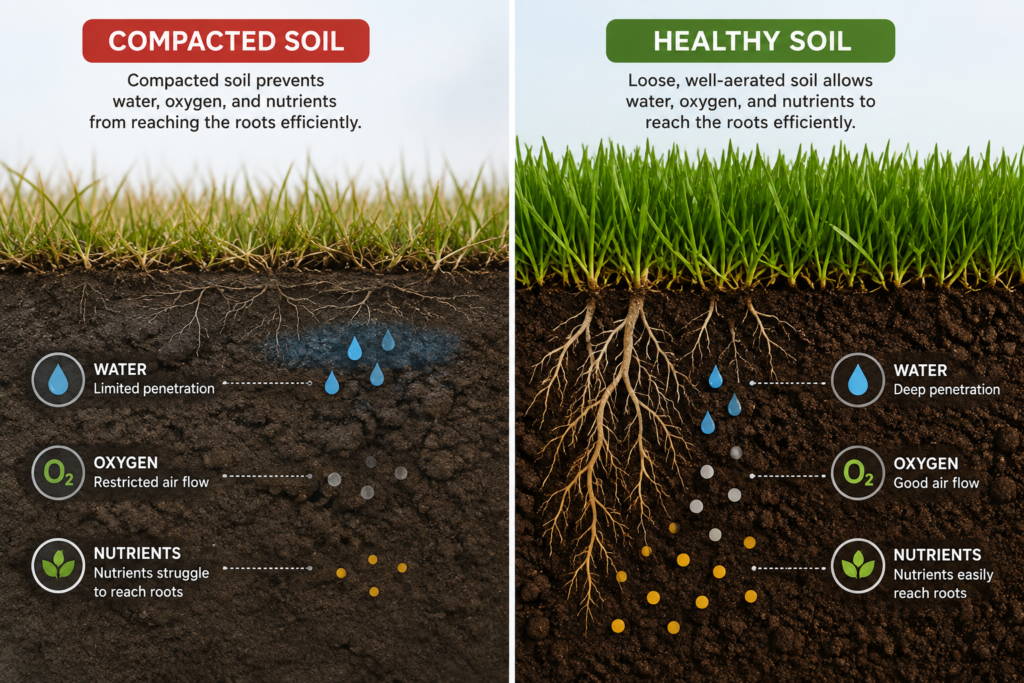
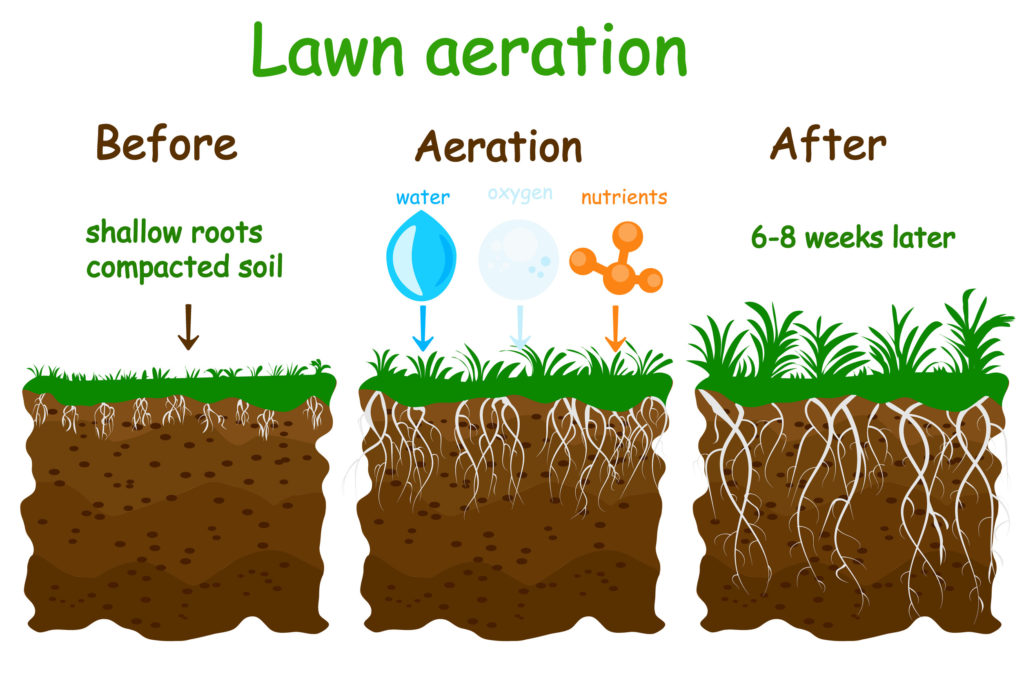
Compacted soil can make it difficult for water and air to reach the grass roots. You may notice problems such as:
- Water pooling after rain
- Poor drainage
- Thin grass
- Bare areas
- Weak root growth
- Grass that struggles despite regular watering
Fall is a good time to evaluate your lawn’s soil and determine whether it needs additional attention.
A soil test can also provide useful information about nutrient levels and soil pH, helping you make more informed decisions about fertilizer and soil amendments.
Consider Lawn Aeration
If your soil is heavily compacted, lawn aeration may help improve the growing environment for your grass.
Aeration creates small openings in the soil that allow water, air, and nutrients to move more easily toward the root zone.
However, aeration isn’t something every lawn automatically needs every fall. The appropriate timing depends on your grass type, soil conditions, lawn health, and the amount of compaction present.
If your lawn has hard soil, poor drainage, or areas where water has difficulty penetrating, professional evaluation can help determine whether aeration would be beneficial.
Overseeding Your Lawn in Fall
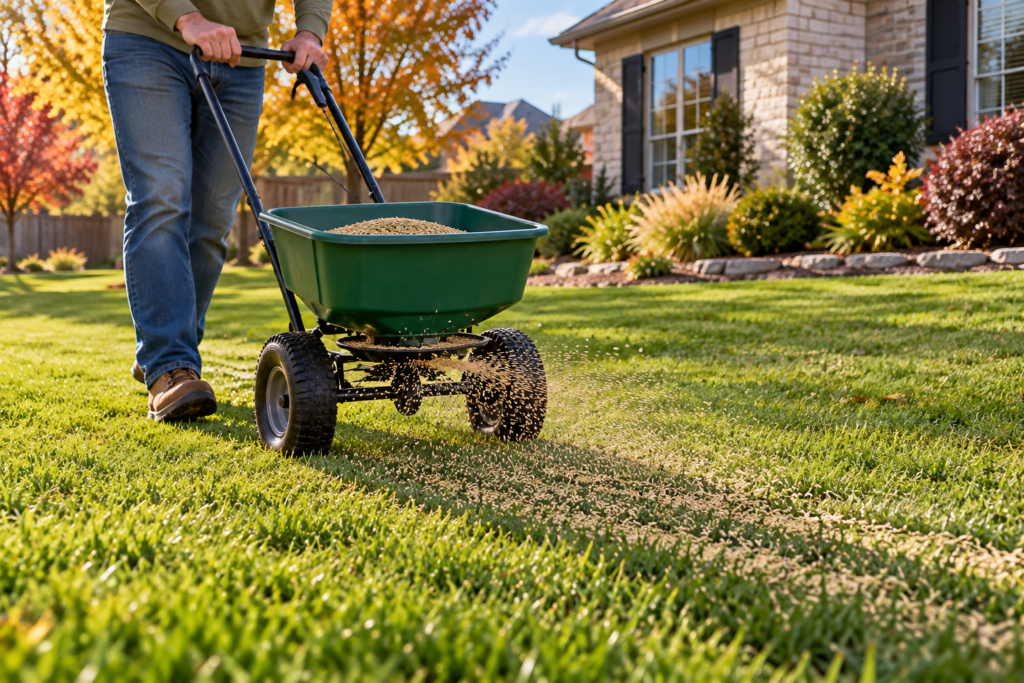
If your lawn looks thin or patchy after the summer heat, fall can be a good time to consider overseeding. Overseeding means spreading new grass seed over an existing lawn to improve its appearance, fill in thin areas, or provide temporary green color during the cooler months.
However, overseeding isn’t right for every North Texas lawn. It depends on your existing grass type and what you’re trying to accomplish. Some homeowners overseed warm-season lawns with a cool-season grass such as ryegrass to maintain a greener appearance during winter, while others simply allow their lawn to naturally go dormant.
The experts at Ryno Lawn Care explain, “Overseeding is a great way to compensate for thin spots that make the lawn look visually uneven. Spreading seed and watering is the basic process, but doing it correctly is where most of the difficulty lies.” Read their full guide, which explains fall fertilizer, aeration, and overseeding techniques.
Remove Excess Leaves and Debris
North Texas may not experience the dramatic fall foliage seen in some parts of the country, but leaves can still accumulate on residential lawns.
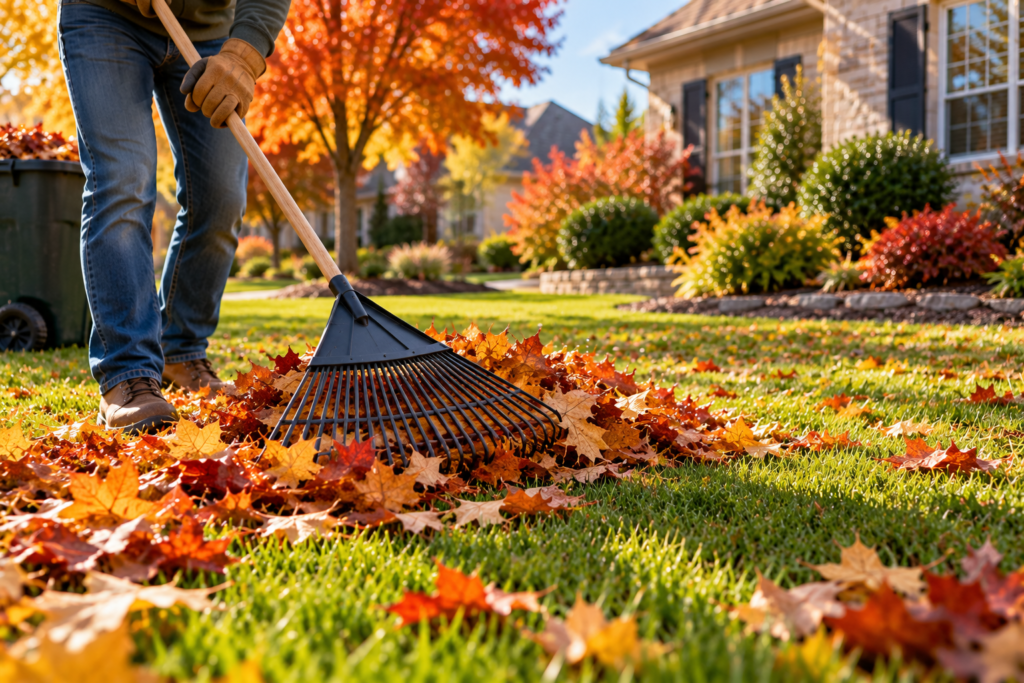
Don’t allow thick layers of leaves to remain on the grass for extended periods. Heavy leaf coverage can block sunlight and air from reaching the turf and can contribute to moisture-related problems.
For a small amount of leaves, mowing over them and allowing finely chopped pieces to remain on the lawn may be an option. Larger amounts should be removed or relocated as appropriate.
Fall cleanup is also a good opportunity to remove excessive debris from flower beds, around trees, and along walkways.
Inspect Your Irrigation System
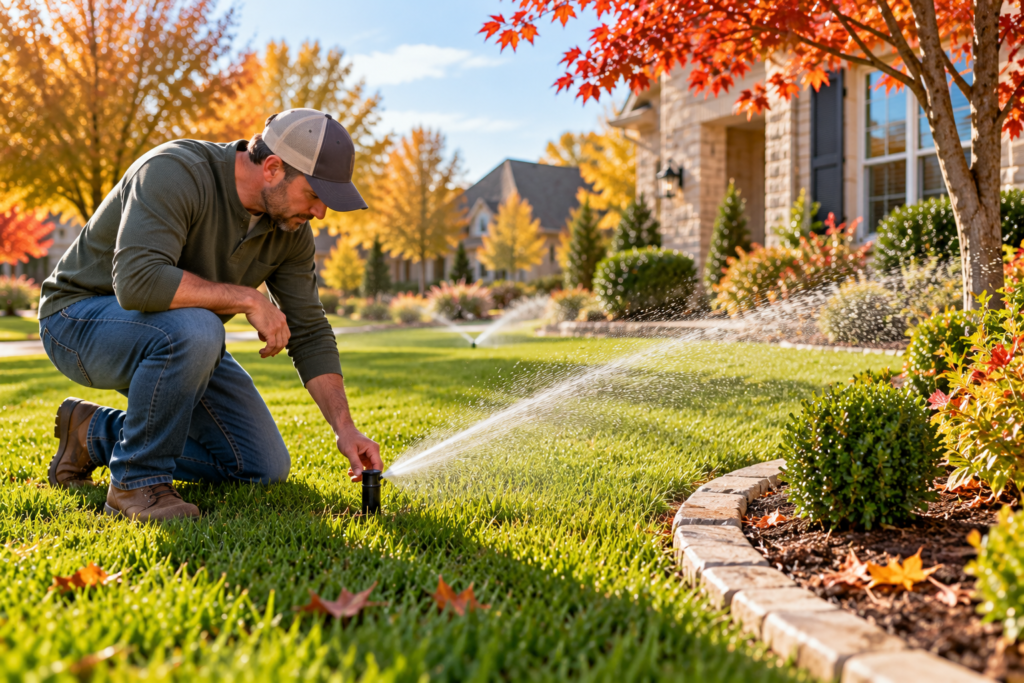
Fall is a great time to make sure your sprinkler system is working properly.
Turn on your irrigation system and walk around your property. Watch for:
- Broken sprinkler heads
- Clogged nozzles
- Leaking components
- Sprinklers spraying sidewalks or driveways
- Areas receiving too much water
- Areas receiving too little water
An irrigation system that worked well during the summer may need adjustments once temperatures begin to drop.
Proper irrigation isn’t about watering as much as possible. It’s about delivering the amount of water your lawn actually needs.
Take Care of Your Landscape Beds
Your lawn isn’t the only part of your property that needs attention in the fall.
Landscape beds should also be inspected and maintained. Remove unwanted weeds, clean up excessive debris, check plants for signs of stress, and refresh mulch when necessary.
Fall is also a good time to look at the overall condition of your landscaping.
Are your flower beds looking sparse?
Have your landscape borders become overgrown?
Could your property benefit from new plants, decorative rock, lighting, or a walkway?
Read what the Dallas Garden advises North Texans to plant in the fall.
Addressing these issues during the cooler months can help your property look its best heading into the next growing season.

Prepare Your Lawn for Winter
One of the most important things to remember about fall lawn care in North Texas is that your warm-season grass is naturally preparing for dormancy.
You don’t need to keep your lawn bright green at all costs as temperatures continue to drop.
Instead, focus on entering winter with healthy turf and good soil conditions.
Before winter arrives, make sure your lawn is:
- Properly mowed
- Receiving appropriate amounts of water
- Free from excessive leaves and debris
- Not suffering from severe weed problems
- Receiving nutrients only when needed
- Checked for compacted soil
- Supported by a functioning irrigation system
As temperatures continue to fall, Bermuda, St. Augustine, and Zoysia will gradually slow their growth. Eventually, these warm-season grasses may become dormant and lose some of their green color.
This is a natural part of the seasonal cycle.
Fall Lawn Care Checklist for North Texas
Not sure what needs to be done? Use this simple checklist:
☐ Adjust your irrigation
Reduce watering as temperatures cool and rainfall changes.
☐ Keep mowing
Continue mowing while your grass is actively growing, but avoid removing more than one-third of the blade at a time.
☐ Evaluate fertilizer needs
Don’t automatically apply fertilizer simply because fall has arrived.
☐ Check for weeds
Inspect thin areas, landscape edges, and other locations where weeds may be developing.
☐ Inspect your soil
Look for signs of compaction, poor drainage, or other soil problems.
☐ Consider aeration
If your soil is compacted, determine whether aeration would benefit your lawn.
☐ Clean up leaves
Don’t allow thick layers of leaves to remain on your grass.
☐ Check your sprinkler system
Look for broken heads, leaks, and areas with uneven coverage.
☐ Maintain landscape beds
Remove weeds and debris and refresh mulch as needed.
☐ Prepare for winter
Allow your warm-season grass to naturally transition as temperatures drop.
When Should You Start Fall Lawn Care in North Texas?
There isn’t one specific date when every North Texas homeowner should begin fall lawn care.
Weather can vary considerably from one year to the next, and different grass types respond differently to changing temperatures.
Generally, start adjusting your lawn care routine as temperatures begin to moderate and your grass starts growing more slowly.
Pay attention to your lawn rather than following a calendar alone. If the grass is still actively growing, it will continue to need mowing and appropriate care. As growth slows, your maintenance routine should change with it.
Give Your North Texas Lawn the Fall Care It Needs
Fall is a transition period for North Texas lawns. Your grass is recovering from the heat of summer while gradually preparing for colder weather and winter dormancy.
A few simple changes to your lawn care routine can make a big difference. Adjust your watering, continue mowing while the grass is growing, watch for weeds, evaluate your soil, clean up leaves, and make sure your irrigation system is working properly.
If you’re dealing with an overgrown lawn, weeds, compacted soil, irrigation problems, or landscape beds that need attention, professional lawn and landscaping services can take some of the work off your plate.